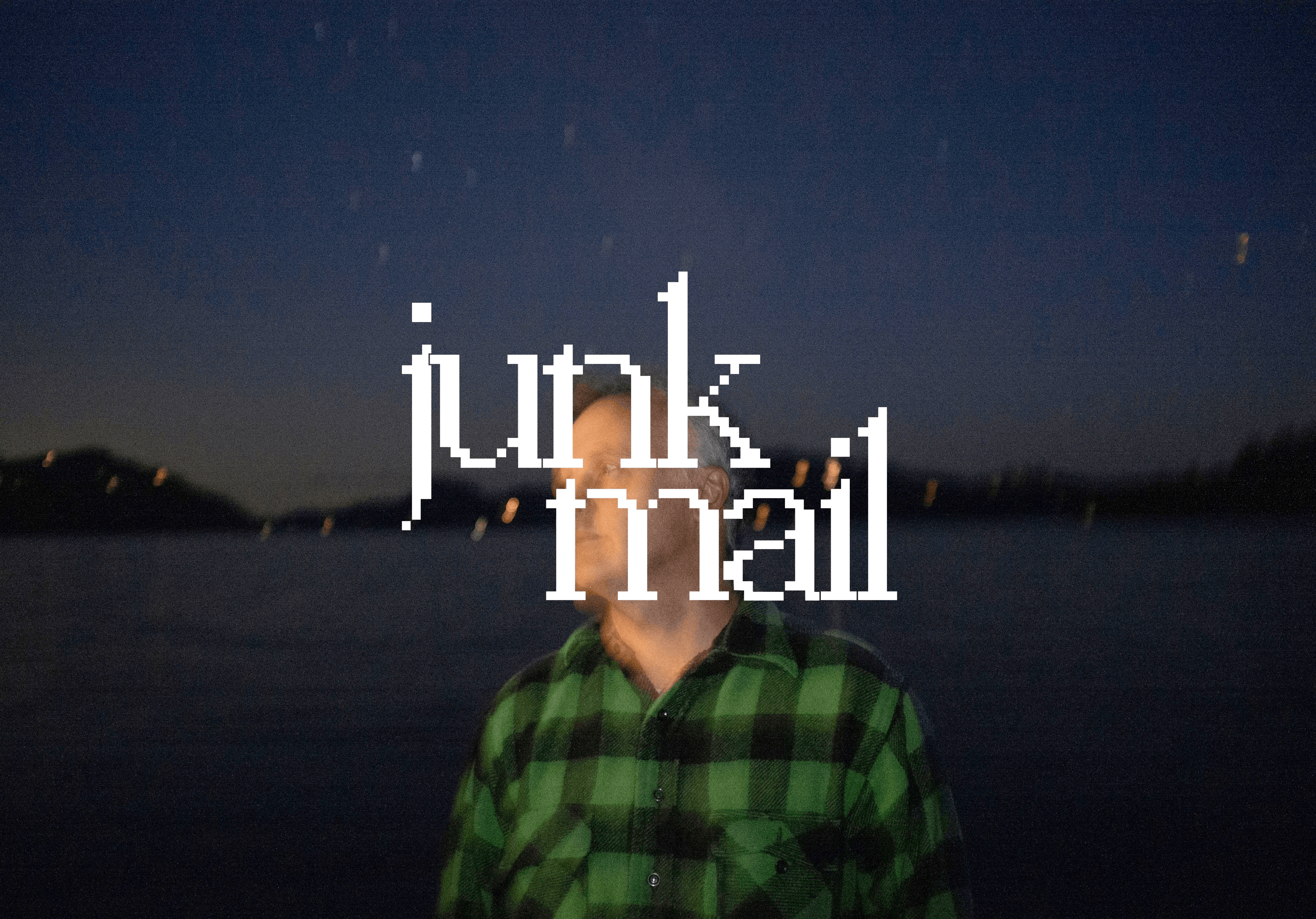
junkmail magazine
A fully-realized publication design project, including branding, editorial layout, and advertsiing materials
00
problem
Creating an entire print magazine campaign is difficult work, especially when trying to indulge in your artistic tendencies while also designing something legible for your prospective readers. I needed to ensure that with my abstract and alternative content, I would still be able to have my print design stand up when set against the popular magazines on the stands today,
solution
While still including abstract elements and an art-driven design-style, the main focus was on creating body copy formatting that was neutral and readable to ensure the magazine would appeal to more than just its niche. Furthermore, the inclusion of artist-provided, professional photography elevated this university project to the level of magazines for sale today.
Junkmail magazine is a space for counter-culturists, slow- livers, experimentalists, and outcasts. For us, every day is imbued with music, film, photography, and literature moulded by the Pacific Northwest's distinct culture. Life and art for us are one and the same, and it's time we come together and share our stories.
This project, which was a part of the PUB332 class at SFU, was a six-part process that allowed me to get a taste of the periodical publication process from inception to printing. For the length of the 12-week project, I worked in InDesign, with some additional assets made with Illustrator and Figma. As it was a solo project, I oversaw every design decision (print layout, graphic treatment, asset creation, etc.), with some feedback given during in-class critiques. My main goal at the outset of this project was to create something that I would go out of my way to purchase and read whenever it came out; I had complete freedom when it came to the subject matter of the magazine.
junkmail was, in my mind, a quarterly publication that inspired emerging and boundary-pushing artists based in the Pacific Northwest. Combining guest essays, short fiction pieces, long-form features on emerging/established artists, and staff review columns of the latest movie/music releases, I wanted everyone who read it to find something they would keep coming back for. I wanted to break down all barriers to entry to this counter-culture movement with anyone who picked up a copy of junkmail feeling welcomed and understood. Alongside all of this, the name junkmail serves as an introspective and ironic comment on the act of pursuing an artistic life. In the public sphere, art is often deemed a wonderful but unnecessary distraction. I, however, feel that when you commit yourself to art, you can find more meaning in life than you may have anticipated.
After establishing the brand and creating an editorial lineup and flat plan, I started working on the interior of the magazine. As this was a solo university project, I only had to focus on one multi-page story and the table of contents for interior magazine materials. For my feature story, I focused on finding an interview with an underground cult musician in the Pacific Northwest, Phil Elverum. His upcoming tour and new album (at the time) made it a perfect reason for him to feature as the cover story.
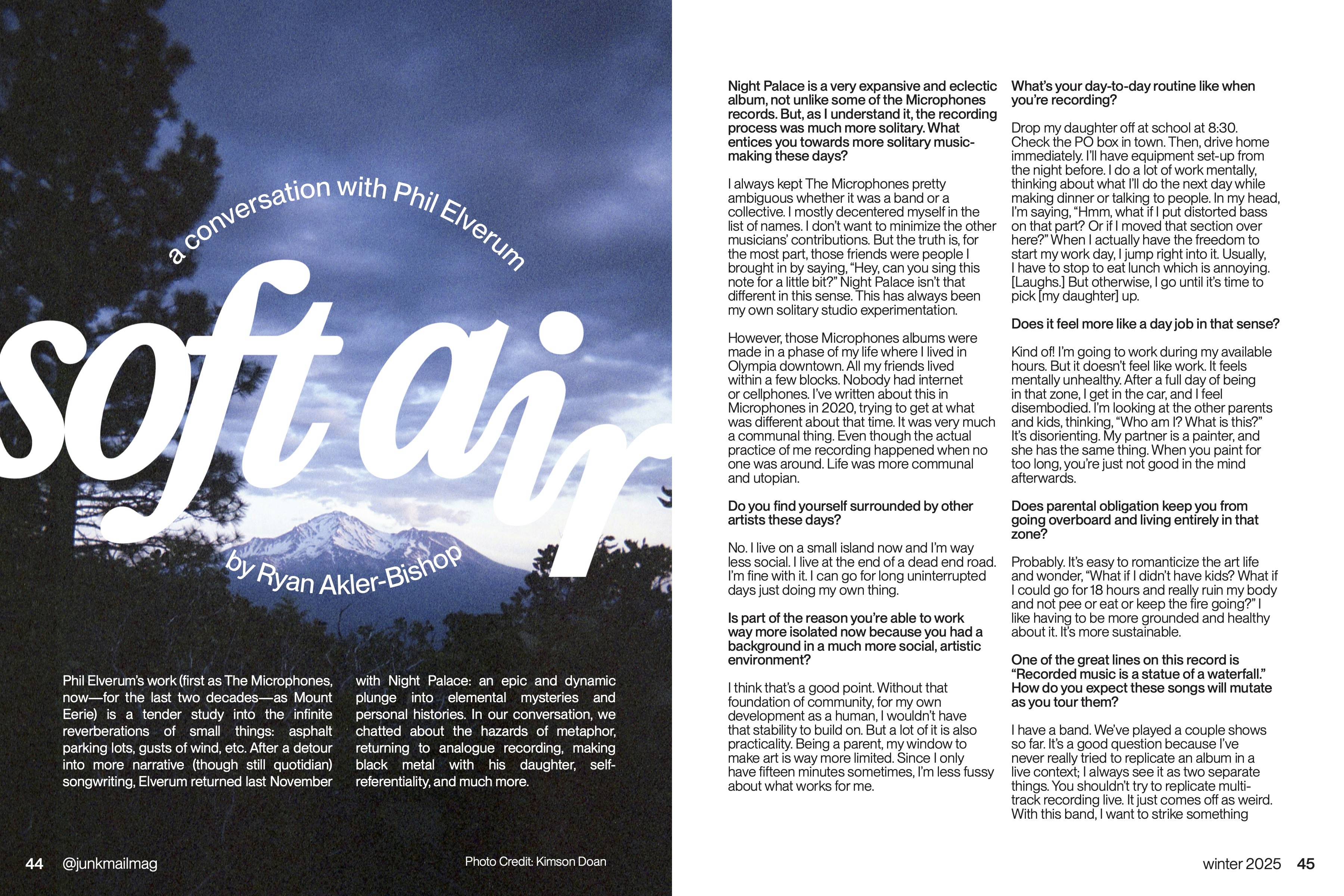
The opening "splash page" I made for the interview with Phil Elverum.
An issue, however, arose shortly after deciding on my cover story. Scouring the internet, there were very few high-quality photos of him available for use. With print design, one of the most important things is to have high-quality images available that translate from the screen and onto the page. After days of not finding anything usable, I reached out to Elverum on a whim, expecting that I wouldn't hear anything back and that I would have to change my cover story. Thankfully (and surprisingly), Elverum responded a few hours later with a collection of high-quality and artistic shots that perfectly matched the tone of my magazine.
Out of all the parts of my project, the editorial content took the most of my time because of how realistic I wanted the end-product to be. I ensured that I incorporated interesting content throughout the story, like engaging sidebar content, a mail-in subscription card, and a tear-out poster. Even the table of contents was fleshed out as if the rest of the magazine had already been completed and was ready to ship.
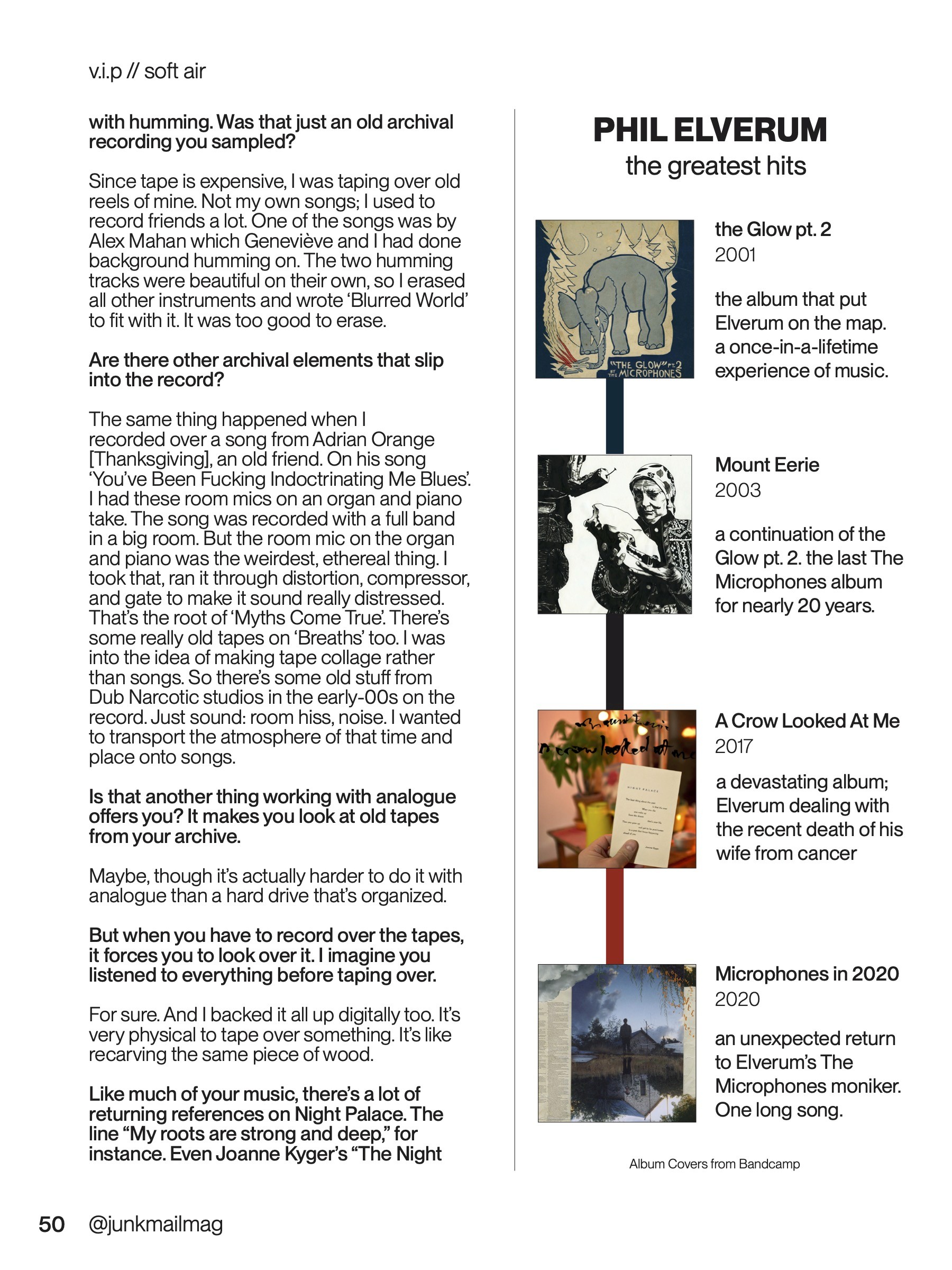
A sample of some of the sidebar content I created for the article.
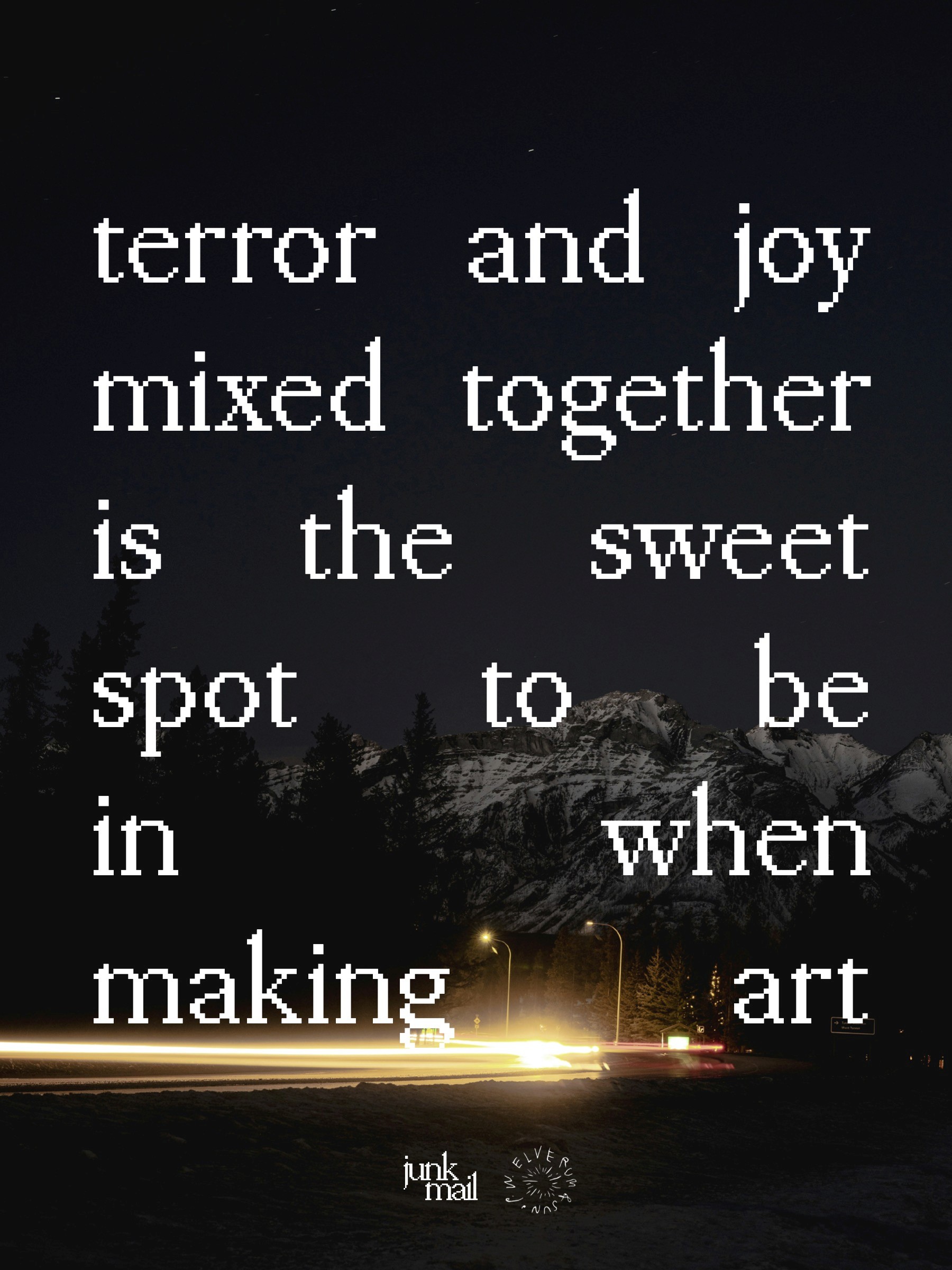
The tear-out poster I made for the feature story.
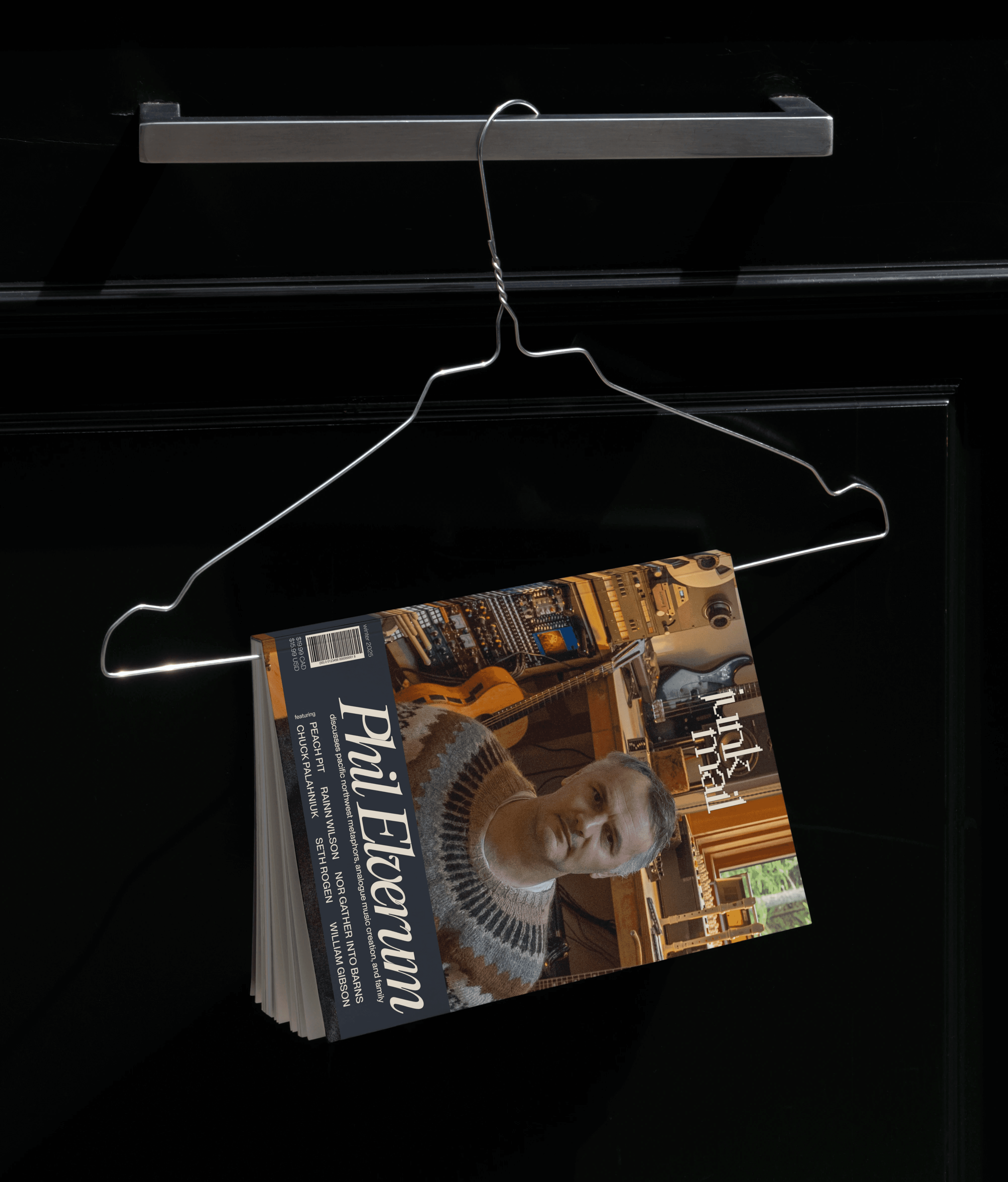
The final piece of this magazine puzzle was the magazine cover - the part of the project that would make or break if my vision could translate to real sales. With the photo used, it was quite hard to fit text on it like a standard magazine, but I also didn't want to just have a photo like many literary magazines on the market. After much deliberation, I decided to create a belly band that would wrap around the entire magazine with the information regarding this issue's contents. It kept the most important information about the magazine observable at a glance without completely overwhelming the artistry in the original image. The reader could also take the belly band off and just display the magazine as an art piece.
Although I wish there were more time for me to expand on certain design concepts and layout experiments during the course of this project, I'm extremely proud of the end product. As this was one of my only solo projects while at SFU, I am glad I had an opportunity to explore and establish my personal design style. In the future, I would love to complete this magazine concept and try to sell it around Vancouver - I think it could find a core audience with many people living in the city.
see also